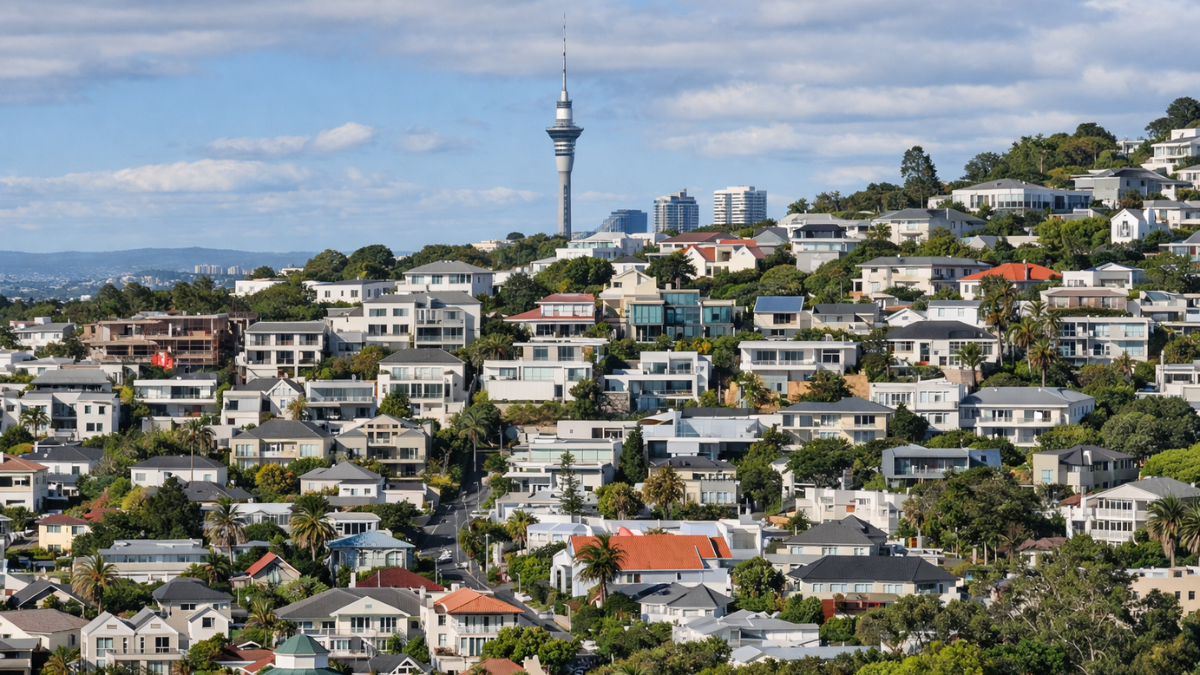
An analysis of how property demand varies across Auckland suburbs and what it means for property investors.
Looking Beyond Location
When investors think about buying property, the conversation usually starts with location.
Which suburbs are growing? Where are the best schools or transport links? Which areas are attracting the most development?
Location will always remain one of the most important factors in property investment. However, once a suburb has been identified, another question becomes important.
What type of property is actually in demand in that suburb?
To explore this, we analysed selling times for properties across a range of Auckland suburbs, focusing on how long different property sizes take to sell.
While many factors influence how quickly a property sells, selling time can provide a useful signal of where buyer demand is strongest.
The results suggest that different suburbs tend to have different demand patterns when it comes to property size.
Consistent Patterns Across Suburbs
While every suburb behaves slightly differently, a number of consistent patterns appear across the data.
One of the clearest trends is that one bedroom properties often have the weakest demand when measured by selling time. In many suburbs they take longer to sell than larger homes.
There are exceptions. Auckland Central is the most obvious example. In the CBD, smaller units dominate the housing stock and the buyer pool, which means one bedroom apartments can show relatively strong demand compared with suburban markets.
Another consistent pattern is the strong performance of three bedroom homes. Across many suburbs they appear to sell faster than other property types. Three bedroom homes often sit in a price range that remains accessible to a broad group of buyers while still offering enough space for families.
These patterns highlight an important point. Demand is not simply about property size alone. It is also influenced by the mix of housing stock in each suburb and the types of buyers active in that market.
Demand Patterns in South Auckland
One area where a clear pattern appears is South Auckland.
Suburbs such as Papatoetoe, Otara and Takanini tend to show relatively strong demand for homes with three to five bedrooms. In some cases four bedroom homes sell particularly quickly.
Number of Days to Sell in Papatoetoe

Family-sized homes in Papatoetoe tend to sell relatively quickly compared with smaller properties.
One possible explanation is the demographic profile of the suburb. Larger households and multi-generational living are more common in many parts of South Auckland, which can increase demand for homes with additional bedrooms.
Why the CBD Market Looks Different
The pattern in the Auckland CBD is quite different from suburban markets.
In Auckland Central, smaller apartments make up a large share of the housing stock. Demand in this area is often driven by people who want to live close to the city centre, including professionals who work nearby and prefer to minimise commuting time.
Because of this, compact properties such as one and two bedroom apartments make up a large portion of transactions in the area.
This helps explain why smaller units can show relatively strong demand in the CBD even though they tend to sell more slowly in many suburban markets.

Smaller apartments dominate transaction volumes in Auckland Central.
This highlights how the local housing mix and the type of buyers active in a market can significantly influence demand patterns.
Why This Matters for Investors
For investors, this analysis highlights an important concept that is sometimes overlooked.
The best property to buy in a suburb is not always the biggest property. It is often the property type that aligns most closely with local demand.
Properties that appeal to a wide range of buyers tend to sell more easily and more consistently over time. Properties that sit in narrower segments of the market can take longer to sell because the buyer pool is smaller.
Understanding the typical demand profile within a suburb can therefore help investors think beyond rental yield and capital growth. It can also provide insight into how easily a property may be sold in the future.
Key Takeaway
Property markets are influenced by many factors including location, price, supply and demographics.
What this analysis highlights is that different suburbs often display different demand patterns for property types.
Across much of Auckland, three bedroom homes appear to sit in a demand sweet spot. South Auckland often shows stronger demand for larger family homes, while the CBD market is dominated by smaller apartments.
For investors, understanding these local demand dynamics can provide another layer of insight when deciding not just where to buy property, but also what type of property to buy within a suburb.
Get in Touch
If you would like to discuss property investment opportunities, feel free to get in touch with the Lighthouse Financial property team.
We help guide clients through the investment process and source high-quality property opportunities aligned with their financial situation and long-term goals.
If you are considering an investment property, our team would be happy to help.
If you’d like to learn more, check out the latest property episode on Cheques & Balances.
References
Real Estate Institute of New Zealand (REINZ). (2026). Property market statistics database. Subscription data portal.
Lighthouse Financial. (2026). Internal market research and data analysis. Unpublished internal data.
Disclaimer:
The information in this article is general information only, is provided free of charge and does not constitute professional advice. We try to keep the information up to date. However, to the fullest extent permitted by law, we disclaim all warranties, express or implied, in relation to this article – including (without limitation) warranties as to accuracy, completeness and fitness for any particular purpose. Please seek independent advice before acting on any information in this article.